
Labels have a quiet way of flattening a person’s world. In the Philippines, where community ties run deep, the phrase “solo mom” often comes loaded with heavy assumptions. People immediately think of sacrifice, struggle, or quiet endurance, but rarely make space for the individual’s ambition, humor, or personal reinvention.
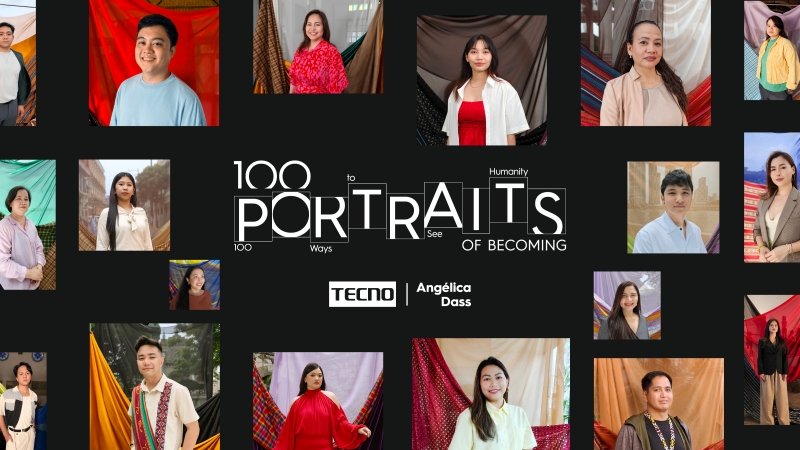
That nuance takes the spotlight as TECNO partners with internationally acclaimed visual artist Angélica Dass for the Philippine edition of 100 Portraits of Becoming. The initiative turns its focus toward the realities of local family life, capturing 20 Filipinos whose stories intersect with solo motherhood.

Seeing Beyond the Stereotype
The numbers behind solo parenthood in the country are staggering. Estimates point to around 14 to 15 million solo parents nationwide, with women making up approximately 95% of that figure. Add to that the 2.19 million Filipinos working overseas in 2024, more than half of whom are women, and you begin to see a web of caregiving that spans generations and borders.
The Manila chapter, aptly themed “See Beyond Labels,” resists the urge to reduce these lives into pity pieces or simple superhero tropes. Shot on location across homes, offices, and neighborhood spaces, the portraits give breathing room to the diverse facets of each subject.
Rather than just focusing on mothers in isolation, the gallery features working solo mothers, adults raised by single parents, multi-generational caregivers, OFW families, and community advocates. Each portrait is paired with a story that digs into everyday questions: How do you balance professional ambition with motherhood? How do grown children look back on being raised in a single-parent household? And what kind of support network makes everyday life manageable?
Three Stories of Everyday Diskarte
The gallery features several familiar faces and personal journeys, each representing their own brand of diskarte—the resourcefulness, hard choices, and practical wisdom women draw on every day:
Ely Haig: Balancing the Court, the Office, and the Home
Ely is a working solo mother, breadwinner, advertising professional, and competitive amateur padel player. When she first had her child, her career was taking off, and she initially stepped back from professional opportunities to focus on caregiving. Over time, she realized that building a life didn’t mean self-erasure.
She carved out room for her career, side projects, daughter, and sports. As Ely puts it: “Being a good mother shouldn’t mean leaving yourself behind. I want people to see more than a solo mom. A mother, yes, but also a creative, a career woman, an athlete, still becoming.”
Twinkle Dimayuga Zamora: Building the Village
Twinkle raised two children on her own before turning her personal journey into community work. She founded MAMA (Mothers Advocating through Ministry and Action), an initiative aimed at providing practical guidance and communal backing for solo mothers and their children.
Her philosophy centers on open communication, asking for help, and removing the shame around needing support: “Sometimes the strongest thing a mother can do is say, ‘I need help.'”
Eunice N. Angeles: An Inherited Tenacity
A fourth-year nursing student, Eunice grew up watching her solo mother navigate hard choices, which eventually led to her mother working as an OFW in Qatar to fund her schooling. Seeing that relentless work ethic up close shaped how Eunice approaches her own studies and future medical career.
For Eunice, the narrative is not about hardship, but legacy: “I want people to see what I grew up with: confidence, determination and the courage to find my own way.”

Authentic Skin Tones Through Inclusive Imaging
For Angélica Dass, best known globally for her human skin-tone documentation project Humanae, this collaboration allowed her to step into intimate spaces across Manila. The series was shot using the TECNO CAMON Slim 5G, utilizing TECNO’s Universal Tone imaging technology. Developed specifically to accurately represent a wider spectrum of human skin tones without artificial brightening or flattening undertones, the camera tech matches the ethos of the shoot: letting subjects be seen honestly, exactly as they are.
As TECNO General Manager Jack Guo noted, seeing how naturally ambition, work, and family coexist in these households showed why authentic storytelling matters. Technology plays a humble supporting role in ensuring those portraits look true to life.
An Expanding Global Story Archive
The Philippine series serves as the second chapter of 100 Portraits of Becoming. Following its opening run in Kenya (which tackled inherited community narratives) and Manila’s focus on family and identity, the project will move next to Saudi Arabia, Türkiye, and Brazil.
You can view the complete Philippine gallery and read all 20 individual profiles at tecno-mobile.com/100portraitsofbecoming.


