
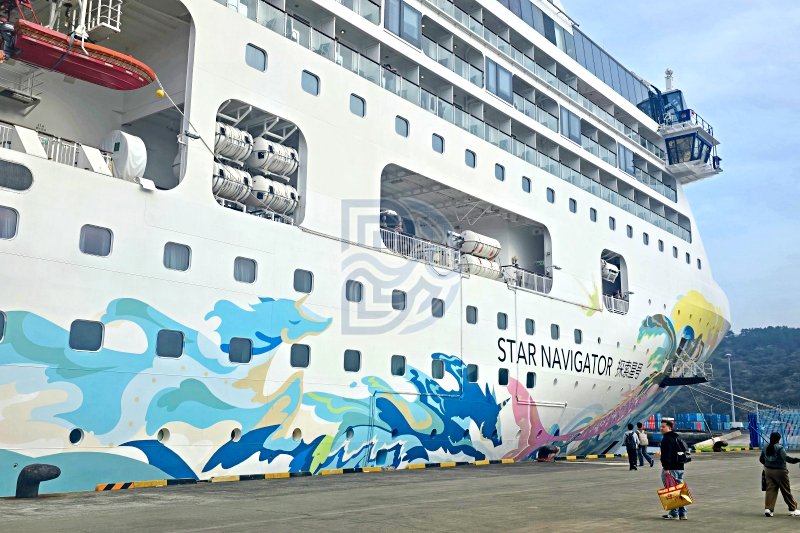
If you are planning your first voyage aboard Star Navigator (operated by StarDream Cruises) out of Keelung, Taiwan, here is a practical overview of what to expect—from upfront costs and border clearance to life onboard and disembarkation day.
Having had to figure out most of these operational quirks on my own through endless customer service inquiries, I put together this guide so you don’t have to second-guess your preparations.
In This Guide
- 1. What This Cruise Actually Cost Us
- 2. Visa Rules for Philippine Passport Holders
- 3. Embarkation Day: Keelung West Terminal
- 4. Oceanview Cabin Essentials
- 5. Life on Board: Dining, Rules & Amenities
- 6. Shore Excursions: Ship Tours vs DIY
- 7. Disembarkation & Getting Back to Taipei
- 8. First-Timer Survival Checklist
The Real Damage: What A 5-Night Jeju – Sasebo – Naha Cruise Actually Cost Us
I booked our late-March 2026 Star Navigator sailing for two directly through the StarDream Cruises official website in December 2025, though slots often open as early as October. You can either book direct online like we did to catch early-bird deals, or go through an accredited travel agency if you prefer assisted booking.
| Expense Item | Total (USD) | Per Person (USD) | Per Person (PHP) | Notes |
|---|---|---|---|---|
| Base Cabin Fare | $1,018.00 | $509.00 | ~₱30,622.00 | Discounted via Fly Cruise Early Bird promo. |
| Port Charges | $200.00 | $100.00 | ~₱6,016.00 | Mandatory port levy charged at booking. |
| Prepaid Gratuities | $200.00 | $100.00 | ~₱6,016.00 | Can also be paid onboard. |
| Total Booking Cost | $1,418.00 | $709.00 | ₱42,673.29 | Charged as ₱85,346.58 total via credit card. |
Other charges (to be paid by the end of the cruise at the reception or online via the QuickPay portal):
- Japan International Tourist Tax: We paid 1,000 JPY (~220 NTD) each (note: for sailings from 1 July 2026 onwards, this tax officially tripled to 3,000 JPY / ~660 NTD per head).
- Onboard purchases such as duty-free shopping, arcade tokens, Wi-Fi access, meals, and more are billed in New Taiwan Dollars (NTD).
Do Philippine Passport Holders Need a Visa to join a Star Navigator Cruise?
If I’m being completely honest, the lack of visa requirements was the single biggest selling point that convinced me to book this cruise. As a first-time visitor to Japan holding a Philippine passport, getting to step ashore without applying for a tourist visa beforehand was an absolute game changer.
Jeju in South Korea is completely visa-free for Philippine passport holders.
For Japan, you simply present an A4 photocopy of your passport alongside your completed Disembarkation Card and Customs Declaration form upon arrival at the first Japanese port of call. Immigration officers will affix a temporary Landing Permit for Cruise Ship Tourist sticker directly onto the back of your passport copy, valid for your entire cruise itinerary. Treat this document like gold ashore: it serves as your official legal identification and is widely accepted by Japanese shops for tax-free shopping. Just keep in mind that you will surrender this stamped sheet before re-boarding the ship at your final port of call in Japan.
Tip: Japanese immigration strictly requires your passport bio-page photocopy to be on A4-sized paper. If you bring standard letter-sized copies from home, you will need to head over to the Deck 7 concierge and pay 20 NTD per page to have them reprinted.
Note: ONLY the cruise that goes to Busan requires an active South Korean tourist visa.
What to Expect on Embarkation Day?


If you are flying into Taiwan from Manila or abroad, never risk landing on the morning of embarkation. An unexpected tarmac delay, a queue at Taiwan immigration, or delayed baggage can ruin your holiday before it begins—and the ship will not hold the gangway.
We deliberately flew into Taipei a couple of days early to build in a safe cushion and explore the city at an unhurried pace. (I’ll be breaking down our full pre- and post-cruise Taiwan itinerary, hotel base, and easy transit hacks in a separate post!)
As instructed, I did our online check-in within 48 hours prior to departure. On sailing day, we gave ourselves ample time to get to the port. Here’s how ours played out:
- 2:44 PM: Hopped into an UberX from our Songshan hotel in Taipei (alternatively, Keelung station, which is a few minutes walk from the port, is around 45 minutes by train from Taipei Main Station).
- 3:15 PM: Reached Keelung West Passenger Terminal. Even though our assigned boarding pass slot was 4:00 PM, port staff let early arrivals drop luggage and line up right away.
- 5:00 PM: Finished luggage drop and document checks. Received our sea pass card (serves as room key, identification card, and onboard charge card for all purchases) and essential forms for Japan entry.
- 5:20 PM: Staff allowed us to queue for immigration departure (earlier than the 7:00 PM slot in our boarding documents).
- 6:00 PM: Boarded the ship and stepped into our cabin.
- 6:20 PM: Squeezed in our first dinner at Dream Dining Room, followed by the mandatory passenger safety drill just before sailing out at 8:00 PM.
Star Navigator Oceanview Cabin Essentials: Practical Things to Know

Here are what you should prepare for before sailing if you booked an Oceanview Cabin:
- Power & Charging: Outlets are limited (one beside the bed, one at the vanity). You will need a universal travel adapter to charge multiple devices smoothly.
- Room setup: Can welcome up to three guests. There is a queen size bed and a fold-out sofa chair.
- Bathroom Note: The en-suite shower layout is functional and clean, but take note that there is no bidet.
- Bow Motion: Forward cabins on Deck 8 feel noticeable pitch and roll while out in open waters. Pack motion-sickness medication just in case.
(I share a full, room-by-room photo tour and what it was like waking up to those ocean views in my next post!)
Life on Board: Inclusive Dining, Ship Rules, & Amenities


Most of the daily rhythm aboard Star Navigator centers around Decks 7 and 8, where the lounges, duty-free boutiques, and central Grand Plaza are clustered. It makes navigating the ship feel straightforward, but there are a few operational realities you will want to keep in mind once you settle in.
The biggest surprise for first-timers is how inclusive dining operates. Unlike larger international liners where complimentary soft-serve stations, pizza parlors, and drink fountains run virtually 24/7, meals here are strictly tied to designated operating windows. Breakfast, lunch, and dinner are covered across three venues: the sprawling Lido Buffet on Deck 12 (our default choice for varied Asian and Western spreads), family-style Chinese dining at Dream Dining Room, and sit-down Western multi-course sets at The Pavilion. However, once a meal window closes, there are no complimentary snacks or free drink bars available until the next shift.
If you are prone to late-night cravings or afternoon slumps, pack your own sealed snacks, biscuits, and bottled drinks from Taiwan, or restock at convenience stores during shore days. While you are allowed to bring packaged dry food back onto the ship, outside liquor is handled differently: any alcohol bought ashore (like the cans I picked up in Jeju for pasalubong) will be surrendered before boarding, where staff tag and hold it safely until final disembarkation in Keelung.
When it comes to onboard activities, casual amenities like the open-air Parthenon pool deck, Caesar’s waterslide, jogging track, and live music at the Grand Plaza are free to enjoy. On the other hand, headline productions at the Zodiac Theater, arcade tokens, and satellite Wi-Fi packages all carry extra fees.
To keep track of daily event timings, restaurant hours, and docking schedules, check the electronic LED display boards located on every passenger deck right near the lift lobbies and around reception. You can also view the full schedule on your smartphone via the onboard intranet portal without purchasing a Wi-Fi plan, or request a printed copy from the Deck 7 reception desk if you prefer keeping a physical paper copy in hand (as reference or souvenir).
One critical amenity worth noting early is the Medical Centre down on Deck 4, where consultations and clinic services are billed out-of-pocket. Pack a well-stocked personal medicine pouch with pain relievers, motion-sickness tablets, and basics, and always verify beforehand that your travel insurance policy reimburses cruise infirmary charges.
Shore Excursions: Organized Tours vs Going DIY
Once Star Navigator docks and you’ve cleared port arrival procedures, how you make the most of your day ashore is totally up to you.
If you prefer having someone else handle the logistics, StarDream Cruises runs guided group excursions at every stop. You can look through the tour options and sign up at the Shore Excursions desk on Deck 7 (a word of advice: slots fill up fast during sea days, so don’t wait until the morning you dock). These packages generally include coach transfers, standard attraction entries, and bilingual guides.
We opted to skip the packages and do our own thing instead. Going the DIY route gave us complete control over our schedule and let us linger where we actually want to. We just made sure we were back at the terminal no later than an hour before the cut-off, giving us ample time to clear departure procedures (and even do duty-free shopping).
(I’ll be diving into our exact DIY itineraries + tips for Jeju, Sasebo, and Naha in an upcoming port guide!)
Wrapping Up: Disembarkation & Getting Back to Taipei
On our final night aboard Star Navigator, the crew will make announcements regarding disembarkation. We were asked to submit our digital Taiwan Arrival Card, settle any outstanding room charges, and retrieve your passport. Heavy bags are to be left outside the door by 10am the following day.
It took us an hour to finish disembarkation, baggage claim, and port customs and immigration upon returning to Taiwan. Please follow Taiwan Customs regulations on what you can and cannot bring into the country.
First-Time Cruise Passenger Checklist
- Double-check your documents. Bring passport photocopies on A4 paper only.
- Purchase your eSIM or data roaming package in advance.
- Prepay your onboard WiFi access during booking to lock in discounted rates.
- Get travel insurance.
- Complete online check-in within 48 hours before sailing.
- Pack a universal travel adapter for in-cabin charging.
- Stash motion sickness tablets, especially if your room is near the bow.
- Get there early so you can board as early as possible.
- For DIY excursions: Set an alarm 1.5 hours prior to your departure, so you can start making your way back to the cruise terminal.
- Settle your onboard account online the night before.
Cruising, especially aboard Star Navigator out of Keelung, proved to be one of the lowest-friction ways to visit South Korea and Japan. It completely dispelled the notion that cruising is financially out of reach or a visa nightmare for Philippine passport holders. With the right promos and simple prep, an international sailing is entirely feasible, and well worth the leap.
Up next: I’m sharing what it was like spending my 36th birthday at sea aboard Star Navigator—including a sweet onboard surprise, a nostalgic, full-circle reunion with a ship I visited twice as SuperStar Virgo, and more.


